
Episode 19: Living with Huntington’s Disease (Part 2 of 3)
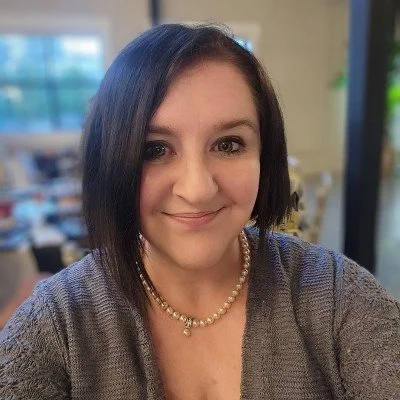
Lauren Holder
Guest
Lauren Holder, host of the Help4HD podcast and a rare disease advocate, who lives with Huntington's disease.
TRANSCRIPT
Susanna Smith
Hi everyone, this is Genetic Frontiers. A podcast about the promise, power, and perils of genetic information. Find us wherever podcasts are found. Follow Genetic Frontiers on LinkedIn and Substack to join the conversation about how genetic discoveries are propelling new, personalized medical treatments but also posing ethical dilemmas and emotional quandaries. I'm your host, Susanna Smith.
Today's episode is part two of a three-part conversation with Lauren Holder. In the first episode, Lauren talked about finding out, at the age of 15, that her grandfather had Huntington's disease. Lauren did genetic testing when she was 20, and found out that she, too, is gene positive. And Lauren and I talked a lot about how little support there was 20 years ago when she tested for young people like her, who didn't have any symptoms yet. And out of anger at how little support she was offered, Lauren and others in the HD community, like Matt Ellison, began to build the resources they needed themselves. They became advocates.
Lauren has been deeply involved with the Huntington's community and with Huntington's research for 20 years. She hosts the Help for HD podcast. Her desire to offer people who came after her more resources than she was offered speaks to Lauren's tremendous optimism and resiliency. But it should also be a wake-up call for medical professionals and the genetics community. We're offering more and more people genetic testing and genomic sequencing but in my view, we're still largely failing to understand how to help people live well with difficult genetic information.
My experience as a previvor of an incurable genetic disease echoes Lauren's in many ways. Because the medical system in the United States approaches people living with significant genetic risks, people like me and Lauren, strictly as a problem that needs solving, a disease awaiting a cure. But when there is no cure, and there is no treatment clinicians assume there's nothing to be done. That simply isn't true. Lauren and I talked a lot in the first episode about how much we needed, but didn't get referrals to therapists, who are trained to understand how genetic disease threatens family systems, how to care for those relationships in the face of generational trauma, and negotiate your life in the liminal state of living at risk. And we needed decades of support with caregiving, and healthcare providers who could help us live better with risk, people like nutritionists, physical therapists, occupational therapists, psychologists. In essence, we needed holistic health support. We didn't get it, but I believe it's possible.
So let's return now to my conversation with Lauren Holder, which is brought to you by the Tell Me Project, a story archive and a listening project where I host conversations about the meaning of genetic information in people's lives.
So, Lauren, I want to pick this conversation back up with talking about, the stories families tell themselves or tell each other about genetic disease. When there's a genetic disease in the family, how do we talk about it? And often, those stories are filled with silence, because there's a lot of stigma and shame attached to genetic disease, especially if you go back a generation or two generations. So, how did your family talk about Huntingtons?
Lauren Holder
So…I did not know my great-grandmother or anything, so a lot of what I got was from my aunt, because she and I had, like, extensive discussions about HD over the years. But apparently my great-grandmother, so her grandmother was the one with HD. And…she remembers going to visit when she was younger, but…basically, they said, oh, well, you know, she's sick and crazy, and nobody associated with her. So her family basically just let her kind of be in her own space and deal with it herself, and nobody knew what was going on. They did not talk about it whatsoever. And my grandfather, never, never mentioned it. He never mentioned his mom. Nothing. Like, that was a closed book for him. We did not talk about his mom. And one person in the family, I think, said that she had Parkinson's or something like that, but that was it. You know, like, other than the one time that my aunt had been told right before she got married about Huntington's. It was never brought up again when it came to my great-grandmother. We have no idea who it was before her that had it. I didn't know until all of this happened that I had extended family on that side. So for me, like, I've got a really big family on my mom's side, and they're Hispanic. My grandmother's from Cuba, so very Cuban-Hispanic culture, everybody living close to each other, helping each other. And then on my dad's side it was opposite. So, it was…him and his sister, Amy, lived nearby, and was very close, and then their sister, Leslie, lived in a different state, and his side of the family was very broken.
I just remember even my grandfather saying that we were making up the Huntington’s just to trap him. Because he didn't want to admit that he had HD. You know, and never, never would talk about his mom. But when we found out about… when I found out about the extended family… my Aunt Amy knew about the extended family. I actually got to meet them when my grandfather died, so they came to the funeral, and it was really cool to meet, you know, people that I just didn't even know they were a family, but they live in New York.
And… apparently. My… so my great-grandmother's sister also started showing symptoms of HD, and she committed suicide when she started showing symptoms. But her kids were not aware either, and so they were at risk, and nobody had informed them. At that point, I was gene positive. Right. And I'm like, is nobody gonna say anything to extended family? You know, I don't have… I don't have their contact information. So I have no idea if they ever found out, if they ever… but yeah, I mean, it was such a…hush, hush. We don't talk about this thing that…
Susanna Smith
This is one of those areas that I have heard talked about a lot in genetic counseling, like you know, this… this affects families, it affects the whole families. I'm like, well, yes, it's true, and you and I are living examples of that. But what I haven't seen is actually, like, the counseling approach to, then, how do you help whole families. Like, so we had the same issue. My mom was one of nine, so she has 8 siblings. Well, 7 of them are living now. No one really told us, like, how do you tell the family? They talk about it like a family disease, but I've never received any kind of support, and like, even how do you talk to your siblings about it? Or how do you even, like, as you get older, okay, choices around having kids, and how do you discuss those things in non-judgmental ways? Like, I'm gonna do this, and you're gonna do that, and just the tools of communication around a really hard subject.
Lauren Holder
You would think that, yes, you would think genetic counseling would be involved with that, and it's not, or that they would even refer it to a therapist, that they would educate on what was going on, but they don't. When I tested, I mean, they… truly, there was nothing And, for example, I had to undergo genetic testing for breast cancer. That whole process was so completely different than what I went through with HD. So, when I went, I was… I was given so much information, I went through the process, got my results afterwards. They had me set up with specialists. And I was blown away with how incredible it is to undergo genetic testing for cancers and get resources, and get referrals, and get… I mean, they said, yeah, if you want to see somebody, we can set you up with a therapist, whatever. But then, compared to HD, it was like… Yeah, there's a… There's nothing.
Absolutely, and when I was talking to that genetic counselor about it, and how different it was, she's like, yeah, because HD is its own beast, and, you know, it's like that for rare genetic diseases. There's just, it's, it's its own beast.
Susanna Smith
Yeah, and part of me agrees with that, and part of me doesn't. As in I guess it's kind of what we had said at the beginning, this idea of, like, living in this gray space of previvorship of either knowing, like, I know I have a 50% risk, you know you have 100% risk, and you know what's coming down the pike, right? You have a sense of what is going to happen, and that's a very scary prospect. But for you and I, I think that's shared, like, the psychological state of looking out and be like, this is a grim future for which there is nothing I can do, that I'm aware I can do.
And this is why I kind of, like, circle around, like, can we talk about this more? Of, like…Okay, then what does it mean to live in that place, that psychological state mentally and emotionally.
And why is our response, if there's nothing you can do clinically, there's nothing to be done?
Lauren Holder
Right, yeah.
Susanna Smith
And really, it's like, I need community, I need connection, maybe I need to talk about this openly, or I need to…sit in a quiet space and process deeply difficult information. Like, my experience was, it's not there's nothing you can do, it's that I was released into the wild and did all the emotional work largely by myself.
Lauren Holder
Yeah.
Susanna Smith
But it's not because I did nothing, and I'm, you know, I'm now…
Lauren Holder
Right, exactly.
Susanna Smith
Twenty years out from it, and I'm in a radically different place living with that information than I was when I first heard it.
Lauren Holder
Yeah, oh, for sure. So… But that's it right there, is we've had to do the work, right? Like, I am 20 years down the road, yeah, my… my journey is so different then where I started, and…I have done a lot of work to make sure that others don't have that similar journey to make changes because of there being this lack. And so, going back to that emotional side of it. I remember after getting the results, after finally telling my family all of that and being on this emotional rollercoaster, and…was kind of self-destructive, even, you know, just… just where I was, and…
I remember saying to myself, you know. I need to do something. This can't be how it is.
There has to be a solution to… to this. And that really has kind of fueled me. So every time, it's funny because I say this to friends a lot, I am very much a person of when I get mad, I turn that into a passion, and then things happen. So, I would get mad for the lack of resources and be like, okay, well, how do we fix this? Now let's do it, and we would end up with something.
So, I started off basically fundraising. That's how I got involved in the HD community. I got involved with National Youth Alliance, and went to a conference, and it was… it was life-saving for me, truly was, and changed my perspective on how I deal with HD. And… Yeah, I mean, I've gone from… doing a small fundraiser, and that's what I started off with, to…I do a podcast, and I am a patient advocate internationally now. I've written a book, and I've, you know, there's… I go and talk to regulatory, and work very closely with Critical Path Institute, and I'm part of Institute for Gene Therapies. You know, there are so many different things now because there were gaps then. And in talking about, you know, you said you're living with it, and it truly has been this change in mindset, for me at least of, I'm dying from Huntington's to I'm living with Huntington's. And now trying to get other people, including the medical professionals, to stop looking at this as the death sentence, and that we are dying from HG, and oh well let's wait until your brain is too sick to be able to participate in stuff, or to do something, to… let's start living with this disease, start giving resources and everything years and years and decades before, when we know things start, before you can even see it. And turn this into something that we can live with. And give us a quality of life, and that includes providing mental health resources at the genetic testing process. And, yeah, so, I mean, it all started in a very negative place. But I can say 20 years down the road that it's not negative any longer. It's definitely…turned into a passion, something that I've… I've stuck with, and…I'm in a very different place than I was.
Around the same time that I tested, I had a friend in the UK who tested. His name is Matt. And he… Tested positive as well. He did this incredible thing.He took the experience of us not having anything like that, right? Being in our 20s, early 20s, and like, how do we talk to… people…
you know, significant others, how do… like, how do you go on a date and decide when is the right time, and how do you talk to siblings, and all of that, right? And he…saw that we had a gap in our community, and that was not being discussed. And he created his own non-profit, which has become one of the biggest HD organizations in the world. And it's called HDYO, this nonprofit. I'm an HDYO ambassador, and it has become one of the best resources. Because everything we just discussed, we address.
Susanna Smith
Nice.
Lauren Holder
And they do it at a level… it's… it's made for…kids and youth, and so it's at a level where they can understand and they break it down. Now when I talk to people who are looking for even just basic information on HD, and I want them to be able to understand it just at the basics level, I always recommend people go to this website. And then at the conventions, we now… not just HDYO, but, all of them have some type of…How do you… how do you talk to your kids, and how do you talk to your significant other? How do you talk to you know, friends. So, Help for HD…does it in a way of panels, right? So they get people who have been through it, and then we provide different perspectives and do different panels. HDSA tends to do a more professional-led social worker perspective. And then HDYO is a good mix, and also comes from that youth perspective, and can really share on how a young adult could share with friends, and share, you know, share this information with siblings, and they really break it down really, really well. So, I highly recommend checking out their YouTube and their resources, because they're phenomenal.
Susanna Smith
We've talked about this, like, Huntington's in some ways is so far ahead, I think, in terms of community building and community organizing, and then at the same time, I know you, like, your voices haven't been heard as much, like, the people who are living with it, and are kind of had to work really hard to get that to the forefront. But in other communities, I would say they haven't even done the front-end community building at all. And so, I look at that, and I'm like, I would guess so much of what you guys have built would apply to other diseases.
Lauren Holder
I guess because we tend to look at Alzheimer's, Parkinson's, right? And they do have resources, but we don't think about the other rare diseases and other neurodegenerative diseases that don't have that… that framework. But yeah, it basically was just young adults who realized that we had a gap. And we needed stuff, and we started creating our own stuff. We started doing, at convention, we started having our own youth track. And… now, like, hundreds of kids come to HDSA convention. From the age of 9 on, I think the other big thing that I have seen is the young caregivers, right? So those of us who may have started caregiving in our… there are several in the HD community who started when they were younger than 10. And, you know, their whole life now, even, is still… I mean, they've… they've always been a caregiver, so of course that's what they're naturally going to do, and…They're educating others in the space to be able to do it.
But that's what we have seen, is we have a lot of young caregivers who don't know
how to be normal, right? What they see as normal with their friends, to be able to talk to their friends about what they're going through, and why it's different for them, you know, and why, like, they may not be able to go and do the more childish things, why they have to take care of their loved one, and…you know, finally having support for them is incredible, because that was not there. But it was a huge need, and my thought there is, it's got to be happening in other disease groups, you know?
Susanna Smith
Oh, I'm sure.
Lauren Holder
Being a caregiver, especially you know, when you're younger, especially in your 20s, right? When you're starting your adult life, like, it throws a wrench in everything that you expected, and…
Susanna Smith
Yeah, no, I think that's huge. I think even naming it, right? And naming, like, yeah, if you end up being a caregiver in your 20s, and I was, it's like… It does derail your career, it does change a lot of the choices you're making, and even… I can look back now and name that, but at the time, I couldn't even name, you are balancing caregiving of a parent with trying to be a functional adult, that’s why this is hard. You know, it's just you're so in it. You don't even have the words to describe what's happening, much less really look for concrete resources or shared experiences.
Lauren Holder
Absolutely.
Susanna Smith
And something I suspect happens for families a lot is, like, it's the child who's still home when the parent gets sick. And then, like, for me, I had left my parents' home, and I would go home a lot, but my youngest sister was still in high school. So it's, like, often the younger kids are the ones… because they're the ones day-to-day living in the house. Right. And it… so it falls heavily on them.
Lauren Holder
Yes. We have a lot of those, and we've created support groups, we've created an online community. One of the best programs I think we've come up with in our community, it's called Game Over HD. It's basically people getting to game together, video games, whatever video games
you know, they have different tracks. They have, like, cozy games, they have on PlayStation or Xbox or whatever, but basically, you get to game together and choose whether or not you want to talk about HD or not. And it's just… It's incredible. To have that, have that space, right? It's a safe space of, you know, maybe I want to talk about stuff, but maybe I don't, and I just need to…release stress, and…
Susanna Smith
Yeah. Well, and just feeling surrounded by people who you know get it. I mean, it's the same reason this call feels different for us than, like, talking to a reporter, or just someone who's trying to cover a story. It's like, well, I'm starting in the place of I know you get it, and there's just a lot of comfort in that.
Lauren Holder
Absolutely, yeah.
Susanna Smith
What do you think made the biggest difference for you?
Lauren Holder
Support from the community, I think, was a big one. Had I not had that support. I don't know that I would be where I am, because… As much as I love family, They can't. Either they can't understand or they don't want to. Or they have their own things going on, and they just can't be there. Like, they don't have the bandwidth. And that's okay. It's okay for them to not be there. But when you don't have a family support system, it's very difficult. I was a primary caregiver for my father, and legal guardian for my dad. And, you know, trying to make sure that his journey with HD was better than what my grandfather went through, and, you know, that was difficult, too, and not having resources, but…truly not having family support, makes that so much harder. So, having the Huntington's community beside me and really being there helped me greatly.
I searched out mental health services for myself. That helped me greatly. I highly recommend mental health services and therapy and I think the other thing that I did for myself is I've been very proactive. And so…I, at the age of 29, I got really scared going into my 30s, and so I underwent baseline neuropsych testing to establish a baseline so I would know If anything happened.
And in 2022, when I started having problems at work that really benefited me, because they were able to look at my baseline testing and see that I had deficits, and be able to diagnose me with a neurocognitive disorder related to HD. So you know, I think those were turning points for me in… in that I was being more proactive, I was…I was showing myself that there was a different way of approaching things, and then trying to also share those things with others so they wouldn't have the same…hardships that I did, you know, and… because I think that's the worst part, is it breaks my heart to see others suffer in such a similar way.
And that goes for the rare disease community. Like, I really did branch out, and, especially in the last 5 years, and…get to know the rare disease community in a broader sense, and…as you said, there are similarities, and you can learn so much, and there's so many things that we can do, and so, I've started getting involved there, and trying to help with gaps there, joined Cures Collective. with, I am ALS. And have… I've really tried to…learn from others, and hopefully help others as well with with lessons that I've learned, and tips and tricks, and whatever.
Susanna Smith
I'm gonna back up a little bit to something you said earlier about your grandpa, and that, you know, your grandpa was drinking, and he was mean. I mentioned before, like, my mom's disease is CADASIL, so it causes, like, ongoing strokes and dementia. And my mom was diagnosed in 2008, but her dad had died in 1984. But we didn't know, right? We had no idea. And it presents, like, ongoing stroke, so it's not like Huntington's as in it doesn't show symptoms that are notable or unusual. They just look like progressive strokes. So we had a similar, like, oh, Grandpa's an alcoholic, right? And so that's the explanation I grew up with. Grandpa was an alcoholic, Grandpa had diabetes. You know, he had a stroke and he died. But there was no other layering of, like, what was actually happening.
Lauren Holder
Right.
Susanna Smith
Until, you know, 25 years later. So…And then this other piece, you mentioned that you cared for your dad, and you wanted him to have a different experience than your grandpa. And so, I feel those really strongly, both of them. But one of the things I guess I struggle with… there's no space in a clinical encounter to, like, explain this. You know, they take the chart, right? And it's like, who on this chart had this thing? But there's no space for family history, including, like the emotional explanations, and the stories I was told and believed growing up that weren't true because nobody knew what was true. And then, how do I, like re-ingest my family system and understand, oh, these people had an untreated disease, they were drinking to respond, probably, to this
thing that was happening to them that there was no reasonable explanation for and no treatment.
You're bringing all that to the table, and then you're bringing to the table, and I cared for my dad, and you're batting up too, and now I'm starting to feel some symptoms. What is that for you? What do you want people to understand about that? Like a genetic counselor, a mental health professional, even your friends, it's just like…And I'm saying this to you because I know, it's so much!
Lauren Holder
It's so much. It's so much, yeah. I know, I'm trying to process, like, oh gosh, where do I, where do I even begin with that?
I don't know, a lot of times, if I'm being really honest, a lot of times I feel like I'm screaming in my head, you know, of…just please understand, or please be patient with me, or please, you know, realize, like, please help me, even, in just the little things. I think one of the hardest things to understand for somebody who is like me, I have cognitive symptoms, and I've got behavioral symptoms, and so you don't see movements, and you don't think, I'm sick. And that's not true. The other thing is I… I've tested highly intelligent. But with my deficits, it brings me down to peer level, which normal response, of course, is, oh, well, that means that you just function like everybody else, so you're fine. No, that's not how that works. It is a deficit, and it's a significant deficit, and so
it's very frustrating and trying to explain to people that there's still a deficit, that I get tired faster because my brain has to work harder. That I am not who I was. And… that should be okay. It shouldn't scare people, it shouldn't be that people walk away because…I am dealing with this, that I'm not… doesn't mean that I don't want to spend time with friends, doesn't mean that, you know, like, it's still very important to me that people reach out. Because I may not be capable of reaching out. And so, it really helps when somebody does.
And I don't know, I think for me, it's just the patience thing, right? Like, even processing takes longer for me than it used to. Thankfully, I'm on medication to help me, so I'm on ADHD medication, which helps greatly with cognitive function. But it's only for so many hours. And, you know, people don't see the… After… It wears off, or the…you know, the really bad days, especially after travel or things like that, because I, often travel for studies, clinical trials, that type of thing. And I think the only person who gets to see that is really my husband and my kids, and even my husband sometimes has a hard time with reconciling that I am not who I was, right? And so I think the best thing anybody can do is to be patient with somebody. Give somebody a chance, and give them a little bit of grace as they are dealing with these changes. Because they're very difficult to articulate most of the time and very difficult to even admit. Because it means that the changes are real. You know, it's better to admit what's going on and be proactive and do what you can, and find new normals, let your brain adapt, things like that, than to stay in a place of ignorance and you're not helping your brain. It sucks, having to admit that. It sucks having to admit that I can't handle everything.
I am one of those people who, like, I was a caregiver, right? And I'm sure you can understand when you've cared for somebody, There is a… away, right? You handle everything. And it's kind of… it becomes a part of you. You never… that never goes away. And so, when you finally have to admit that you need somebody to help you and care for you, like, that's so hard. ChatGPT has become my friend when it comes to wording things, just because before, where I… I had no issues with that. Now, I choose not to waste my energy on trying to… do certain things, I'll let those things help me. You know, I'll let my husband help me, I'll let my cousin help me. There are so many things now where I'm just like, okay, I'm willing to take the help, but it took me a long time to accept that.
Susanna Smith
What is your self-talk about this? Even this idea of, like, the reconciling, right, of, like, who I was and who I am now. What is your self-talk about that on your worst days? And what does your self-talk about on your best days?
Lauren Holder
Oh, gosh. That one's hard. So, I would say, worst days, a lot of times I can't think even of… of day by day, I do hour by hour, of okay, you know what, let me try to get this done in this hour, and if I get that done, then I have accomplished what I need to, right? Like, it doesn't have to be something huge for the day. I… if I can make it outside to breathe, because a lot of times I will get overwhelmed with the fact that I don't feel worthy for my kids especially. Because I've got young kids, and so if I am not doing as much as I wish I could, that's really hard
And if I just take a moment to breathe and remind myself of what I tell them, that I'm not, you know, you don't have to be perfect. Things don't have to be perfect. You just keep trying?
Susanna Smith
Right.
Lauren Holder
Then I try to remind myself of that, what I tell my kids, and what I'm trying to teach them, and…
to make sure that I take a moment to take a breath. So, like, my… my space is out on the porch, and I love birds and squirrels and nature, and, in fact, they come to my house and eat bird seed and nuts and everything, and so I take time to kind of center myself. Before I get back at whatever I need to do.
But sometimes, really, it is like, okay, let me get through the hour. If I can do that, maybe I can get through the next one. And, reminding myself that having a bad day doesn't mean I'm a bad mom.
My kids aren't having a bad life because I have a bad day.
Susanna Smith
So how do you know…go ahead.
Lauren Holder
No, you were saying…
Susanna Smith
Well, I wanted to dig into a little bit of this thing you mentioned of worthiness, because this is something…I've had to really… I think, think through myself. Which is to say, I think in the early years, after my mom was diagnosed, and I was thinking about my own risk…I was not… I would not say I was conscious of this. But in retrospect, like, looking back.
Lauren Holder
Yep.
Susanna Smith
I think I ingested a lot of shame around this feeling of, like, something could be wrong with me.
Sort of, like, I had this fully formed self-identity. My mom wasn't diagnosed until I was 28 so I was older but I hadn't gotten married, I was in graduate… or I had gotten out of graduate school, I was living in New York City, I had a good job, I felt like my life was on this track. And then this sort of, you know, explosion went off, which was my mom's health, so it was like an immediate health crisis, followed by diagnosis, which obviously affected all of us. But for me, I had to, like I think it affected some aspects of my identity for years after that, of me feeling, like, less than.
Lauren Holder
Yes.
Susanna Smith
Less than I had been like, my previous form of self-identity. I will say, I think I've come to a different place with it now. But I've had to do a lot of thinking around and naming. That's called shame. You were feeling shame, and so you made all these other decisions you might not normally have made, and that you don't really agree with when I look back because I felt ashamed. And so this is something I'm trying to talk about with other previvors about. How did this… how did the learning you had this risk, and then learning you have the gene, affect your feelings of self-worth?
Lauren Holder
I love that you're talking about this. And this idea that, for some reason. We feel like we don't deserve… Hold on one second. I need a tissue, because I'm gonna cry. I'm crying because you… you feel this way, too. I… for some reason.
I don't know why it is. That we have this idea in our heads that we… Right, it's shame. We don't deserve to have normal lives. We don't deserve to have everything that everybody else has for something that we didn't ask for. It's a… it's… it's a disease, a genetic disease that we didn't ask for it. And yet, for some reason, we are… ashamed. And feel this need to hide, and I don't know where it comes from. But yes, I have felt it, and I've gotten to a point in my life now where I am not ashamed. And I am vocal about the fact that we have the right to have a life. We have the right to speak up and say, you know, that we… our lives are… are meaningful and matter.
And you know, I've done that a lot with the FDA. And… the fact that… I had to fight with the FDA is what makes me feel… that way, right? Like when I have to fight with a medical professional that my life matters just as much as somebody else, tat… that brings on that shame feeling. But it shouldn't. And I don't know where it started, but all I know is that it's a great idea to speak about it, because it shouldn't happen.
There's been a lot of shame in regard to having children. The topic of testing, you know, in utero versus doing IVF with PGD versus not doing it at all, and what's right, what's wrong. Doesn't matter. It’s somebody's choice.
Susanna Smith
Yeah.
Lauren Holder
And we all have the right to choose the way that we want. What we do in our communities is we be supportive of others. You don't have to agree with their decision on this to support them and love them and say, I'm here for you if you need to talk, and…you know, that's… that's a difficult thing. I think that's what we forget, is we always go back to this right and wrong. Well, what's the right way to do this? What's the wrong way? It's not… there is nothing in a rare disease community that is black or white.
Susanna Smith
Right.
Lauren Holder
I am glad that I have finally gotten to a point of acceptance. It's taken a long time. But I totally understand that feeling of, of… shame. And… yeah, I have no clue where it comes from.
Susanna Smith
You want to hear my theory?
Lauren Holder
Yes, I want to hear your theory.
Susanna Smith
My theory is, I think it's a cultural phenomena. But I think our culture, and I really mean, like, the American culture, but to some degree just the Western approach treats genetic disease, especially Huntington's, as exceptional.
Is it exceptional? Sort of. I mean, as in it's less likely to occur, but the idea of genetic disease broadly as we've studied it more and more, is not exceptional, right? Oh, do you have a cancer risk? Do you have a heart disease risk? Diabetes? Glaucoma? All these psychiatric diseases? The reality is we probably all carry genetic risks, it's just some of them have been more easy to recognize. The pattern of Huntington's is visible, right? You can externally eventually recognize the symptoms. For my mom's disease, it wasn't. So, like, it went unidentified till the 90s, like, they didn't even know it existed, because it just looks like continual strokes.
Lauren Holder
Right, yeah.
Susanna Smith
So even exhibiting those symptoms isn't necessarily shame-inducing, because you're like, oh, we had a stroke, right? But I think it's this idea that has been fed to us culturally—that is simply not true—and genetic research has bared this out in the last 20 years, that, like, you and I are less, fit. We are less genetically able. We shouldn't have children because we are less worthy, right? And I think it is this basic idea, frankly, of eugenics, of, like, some people are less-than genetically, and some people are more-than. And they've divided people based on, I mean, sometimes it was driven by racism, sexism, misunderstandings of intellect, all of these things underlie this idea of, like, genetically good people, genetically bad people, and that's just not true.
But there are… there are aspects in which they were able to name. In the 1800s, this symptom list is called Huntington's.
Lauren Holder
Right, yeah.
Susanna Smith
Because it's autosomal dominant, they can trace it through families. But that gives people the idea that like, I don't have a Huntington's risk, so I'm genetically fit. Right. But what does that mean?
Do you have any of these other things in your family? Like we all have those things, is, I guess, the conclusion I've come to.
Lauren Holder
Yeah, we all have genetic factors that are going to influence different health conditions, different developmental milestones, everything. So, it's such a great point. Yeah, that's… that's a wonderful point.
Susanna Smith
That's part two of my three-part conversation with Lauren Holder. Join us next week for the last installment.
Today's episode of Genetic Frontiers was brought to you by The Tell Me Project, a story archive and a listening project where I host conversations about the meaning of genetic information in people's lives. If you'd like to share a story, please email me at susanna at geneticfrontiers.org.
Thank you for listening to this episode of Genetic Frontiers. Follow us on LinkedIn or Substack, or check out our website, geneticfrontiers.org, to learn more about how we support people to live well with genetic risk through health coaching, education, and advocacy.