
Episode 18: Part 1: Living with Huntington’s Disease
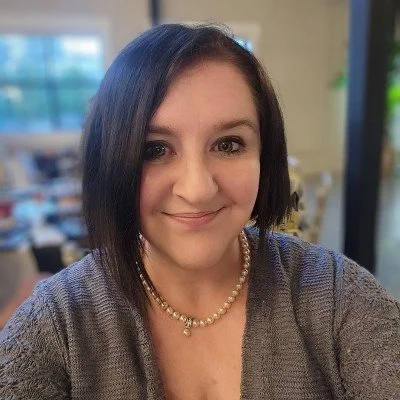
Lauren Holder
Guest
Lauren Holder, host of the Help4HD podcast and a rare disease advocate, who lives with Huntington's disease.
TRANSCRIPT
Susanna Smith
Hi everyone, this is Genetic Frontiers. A podcast about the promise, power, and perils of genetic information. Find us wherever podcasts are found. Follow Genetic Frontiers on LinkedIn and Substack to join the conversation about how genetic discoveries are propelling new, personalized medical treatments but also posing ethical dilemmas and emotional quandaries. I'm your host, Susanna Smith.
A while back, I had the good fortune to meet a woman named Rachel at a kid's birthday party and I mentioned in conversation that I produced Genetic Frontiers and that we were launching a story archive and a listening project called The Tell Me Project where I host conversations with people about the meaning of genetic information in their lives. I share with them a bit of my story, living as a provider of an incurable genetic disease. Rachel immediately lit up and said I should talk to her cousin, Lauren
So today's episode is a conversation with Lauren Holder, who is a rare disease advocate who lives with Huntington's disease. Lauren is the producer and host of the podcast Help for HD. She has been deeply involved with the Huntington's community and with research about Huntington's for many years. This is part one of a three-part conversation with Lauren Holder, brought to you by the Tell Me Project.
So, Lauren, let's talk about your risk of Huntington's. Where do we even begin that story?
Lauren Holder
Oh man, we begin 20 years ago, 25 years ago, actually. So when I was 15 years old
we found out that my grandfather on my Dad's side or had Huntington's disease. We found that out because my Aunt Amy got a phone call from the VA asking about testing him for it, and was wondering if we knew of any history of HD because he was experiencing very weird symptoms.
And so she gave whatever knowledge she had about being told something like in the past, you know, before college, before marriage, whatever, that there was this risk but she kind of put it off because they didn't make a big deal out of it. They just kind of warned her. So she didn't think anything of it until she got this call from the VA and they went ahead and tested my grandfather and he tested positive for HD and was diagnosed.
Well, I was 15 at the time, and I just remember the fear that my Aunt Amy had, and as she was telling my dad and my dad is the oldest and Amy is the youngest, and they have a middle sister. Amy is Rachel's mom. And I've always had a very close relationship with my aunt and my cousins, and I mean, we were over there almost every day. I just remember there being fear as she was trying to navigate what it meant.
And I wanted to find out what this meant, too, seeing that, you know people were reacting to this, and it was serious. And so I started doing research on my own and got online and, you know, this was before social media. Everything that I found about Huntington's disease was extremely scary. Yeah. You know, oh, it's fatal. There's a 50-50 chance of passing it on. There's, you know, there's nothing right now for anybody And yeah, at 15, and you're reading all of this, and you hear that your grandfather has it, and now there's a 50-50 chance that your dad and your aunts could possibly have it. What does that mean for me too
And obviously being a teenager, my thoughts went to well, my dad looks just like my grandfather. So does that mean because he looks like him, that he's gonna get it, you know, not understanding true genetics, right? Like, this is just initial reaction. So it was very scary and really took up a lot of my thinking I started, I mean, I did my senior thesis on Huntington's disease. Because I just started researching and trying to find out more and it just grabbed a hold.
Shortly after my grandfather received the diagnosis and my aunt and my dad were trying to help him, he felt like they were trying to trap him. And so he basically ran away. He ran away to Seattle, Washington from North Carolina. And I just remember there being like very few phone calls. You know, they basically they did their best, but he was an adult. He could run if he wanted to. The only time I remember there being an issue is he got his, something happened with his car. My dad had to go to Seattle and pick up his car and drive it back to North Carolina.
And he was put into a facility after that, and I really don't remember much conversation between anybody, between then and when I was 20 when I decided to test for Huntington's disease.
So like I knew that I wanted to test, There is no doubt after reading about HD, after seeing my grandfather and knowing the risks, I always knew that I wanted to test, that that was going to be what I would do when I turned 18. And I think even more so because of the fact that my aunt and my dad became very involved in research themselves, and the first real observational study for HD called Pharos HD. They participated in that, and so I just really wanted to
move things forward, I guess, be part of a solution. And I didn't feel like I could be without testing myself.
I got married young. I'm married at the age of 19. Well, I was 18, it was a month before my 19th birthday. And my husband was in the Navy so we moved to Connecticut, where he was stationed in Groton, Connecticut. And it wasn't until I was 20 years old that I finally was able to
Undergo the genetic testing process. And you know I was away from family. I was away from everybody. It was me and Josh, and that's it. And I told him, I was like, I need to do this.
So I went to Yale University to meet with a genetic counselor to find out what next steps were. And they said, you know, before we can do anything, we have to have results from somebody in your family who has been diagnosed. My dad had not been diagnosed yet. Amy had not like nobody had undergone that testing except for my grandfather.
And so I now was faced with having to reach out and figure out where my grandfather was and try to get his genetic test results. It was a blessing in disguise. I reached out to whatever contact we had in Seattle that my dad had because my dad did stay in contact with the guardian that was appointed for him. So I found out he had a legal guardian appointed. He was in a nursing. The legal guardian was able to get a court order for me to be able to get my grandfather's genetic test results because the VA would not allow me to have them without a court order.
But in the meantime I decided to continue calling the nursing facility to find out how my grandfather was doing, because knowing that he had a disease he couldn't control
changed my perspective on him completely. This man who I thought was just a drunk, mean, horrible person my whole life so I find out that there's a brain disease that has made him this way, you know, because at this point he had not received treatment. He doesn't, he doesn't even know until a few years ago. And so for him, like we just didn't know. We just thought like he was drunk all the time. I guess for me, having the perspective of, okay, this is Huntington's disease, this isn't him gave me the courage to find out more.
And so I continued to call. This is all while figuring out genetic testing process and and getting ready to test. So I would call regularly, and I remember basically like getting nurses, and they would say, “Well, he's about same,” you know, they wouldn't really give me too much information, just he's about the same, he's fine, whatever. And I got a different nurse one time who said, “He just had a bout of aspiration pneumonia. He's on a feeding tube and bedridden. How do you think he's doing?” And I went, oh my God. Well, I didn't know, you know, like I and it changed everything, my whole Huntington's journey changed.
This was all right along that testing process. And so I was going through the genetic testing.
My husband went with me to Yale to meet with the genetic counselor who explained the genetics of HD to me, which I appreciated, you know, really got into it and what it meant and everything. And at that time I mean, there really was nothing for somebody who wasn't showing symptoms to do. And so I was, I was told by the genetic counselor there's really no point in me testing because this is a death sentence and you know, you can't get involved in research. You know there's, obviously the risk to children, but you can also do IVF with PGD, whether you know or not. So you know, and it was presented as an option, but not realistically presented as extremely expensive and not guaranteed.
And really, it was very negative of you don't need to go through with this, right? Like, really wanted to provide the the narrative of there is no point in testing because it's a death sentence. And that is how HD was presented to me.
And I started crying there in the room that day. And she asked me, she goes, “Why are you crying? Do you not want to do it?
And I said, “No, you're discouraging me from doing something that I need to do for me. I need to know for me whether or not somebody else needs to know doesn't matter. This is because I need to know. I need to know how I can move forward. And this is my way.”
And so she said, “Okay, well then I think you're ready.”
I mean, she truly prepared me for I felt like, you know in that aspect, she did a great job of being negative so I would be prepared. So that day we had blood drawn, did a neurologic exam, like a baseline neurologic exam, blood drawn and told it we'd be back in a few weeks.
That was the beginning of my personal genetic journey with HD. And those were some of the worst weeks of my life waiting.
Susanna Smith
Yes, tell me about those weeks. What happened?
Lauren Holder
Oh, God. It was a roller coaster. You know, there's often, like, am I doing the right thing
by knowing, do I really want to know a lot of crying, a lot of am I, you know, is my husband going to want to stay with me after finding this out?
In my mind, I had convinced myself that I was positive. I guess that was my way of coping.
So before I ever went back, it was like, I knew that I was positive and so I was really in that mindset.
But it was hard because I was away from family. And I mean, my husband was incredible. He was such a wonderful support. But he couldn't possibly understand what it's like going through the process and how traumatic it is and draining and you know you go into a grief cycle and
until somebody actually goes through it, they can't possibly understand how that feels. So I felt very isolated and alone in it.
And then I also had like family members telling me things like well, you don't need to do this because this is going to ruin your dad's life. You don't need to do this because you don't need to worry about this stuff, because even if you test positive, you may never get it, right? That's what they were saying without knowing truly what HD was because obviously I knew that if I tested positive, it 100% meant that I was going to get it. But there was no way to convince family members on my mom's side and you know friends who couldn't, they just couldn't grasp it.
And so, for them, it's like, you're gonna be fine, you're going to be fine Which at the time wasn't helpful for me. I just, I needed somebody to sit with me and be like this may suck, but it's going to be okay. You know, like the reality is that yes, you're facing something that is horrible, but you're going to get through this. I don't feel like that was there so much. Mainly because I was trying to protect everybody else
You know, my dad was very honest and I asked him if he wanted to know. The results and he said no. He didn't want to know, so I had to keep results from him for a couple months before he asked. Which meant my mom had to as well, which if you knew my mom, that's very hard for her to do. But I made her swear that I would not tell her unless she kept her mouth shut after I got results. Like even before we knew what it was, I made her swear she was not going to say anything until dad was ready to know.
So I went in like fully prepared, like truly prepared for a positive result because I did that beforehand and everything.
And then a few weeks after, I mean, this is all just a few weeks. It's so heavy, I know, but it was just a roller coaster in my life truly 24/7 for those weeks. And then yeah, a few weeks after getting the blood test, I got a phone call saying your results are back so go ahead and come on in and we'll go over your results.
So Josh and I made the trip back out. And I didn't even get to the chair to sit down before the genetic counselor said, you're positive for Huntington's disease, your CAG is 43.
So anything above 40, you're 100% going to get the disease. And yeah. I mean, it was shocking,
shocking in that it was just such a quick way of getting it, which I know, you know she was trying to rip off the Bandaid off, just do it. But it was such a mix of emotion because I was just kind of flooded with relief and grief and fear.
And I'm such a solutions person, so kind of like, okay, where do I go from here type thoughts and then it flooded that flooded me that I was going to have to make phone calls to tell people.
And I think that for me was worse than anything. The fact that I was going to have to relive it with family members like my mom. And that was very difficult to think about at that moment.
And I just remember the genetic counselor kind of looking at me and asking me if I was okay.
And I was like, Yeah, I'm okay. You know, I mean, as okay as it can be.
I think for me, what was also rough is at that time, okay, because this is 20 years ago, there were no resources for me. There was nothing for her to give me to say, well, here, let me introduce you to somebody else who is going through this. Or here, let's get you set up with support groups or whatever. And so basically I was there to get the results and it was like, okay, well, have a nice life.
Susanna Smith
Yes, I think in many ways, the Huntington's community, my opinion is one of the most well-developed so I'm sure it's different now, but leave the Huntington's community and that's the reality today in many, many ways. Take this very difficult news. Go live your life. Yeah, you know, that's the whole support. What would have helped in that moment or even in the weeks and months following?
Lauren Holder
Mental health support. I really feel like that would have been a huge benefit. I also feel that
having follow up from a social worker professional would have been very helpful. I know some people, you know, afterwards, they are not wanting to speak to anybody and that's fine. But some people also want to find resources and have something available. And I really felt like I wanted to connect and not be so alone and isolated where I was, and I had to do all of that work myself. I had to find that community. I had to build that community, and you know,
that's difficult. It's really, really hard to do when you're 20, and you don't know the area, you don't know what you're doing.
And I'm so grateful that I did find a community online that really started me on that journey
and found it's the HDSA's National Youth Alliance for youth affected by Huntington's disease ages 9 to 29 and so because of them, it really was life saving for me. Because I found them online and I found community online and I don't know what I would have done otherwise because I really was kind of left out in the cold when it came to medical professionals
Susanna Smith
Right, so yeah, I want to ask you because I also agree with you, and I have said this in various settings among genetic counselors, the lack of referrals to therapists and the lack of collaboration between sort of, we give you the information, and then… then they say, oh, and then you go see a therapist.
I'm like, well, I'm on my fifth therapist. Therapists aren't necessarily well equipped to deal with some of the aspects of, like you're naming the feelings, and they're real. Therapists are trained to respond to grief and you know, anticipatory anxiety, and, like, these words, but it's not the same as, I just feel like genetic information is fundamentally different when it's dropped in your life like that, suddenly process even in a therapeutic setting, what you're processing is grief to me, when I did it. And I I should say, so I'm a previvor but I haven't been tested. So I'm in a little bit of a different place than you are. I’ve walked right up to the edge, because I've tested my pregnancies, so I walked right up to the edge of it, now I might find out and then my baby was negative. So it's like I know the feeling of like waiting those weeks …
Lauren Holder
You know the worst part of it because it was your baby. Yeah, right. That's even worse. I've been there too, so I get it. Yeah.
Susanna Smith
But I very much agree with you. There's this big, big hole of they give you this information and then you do what with it. And I mean, in your case, you go online and you seek like-minded people, but there's this huge hole in the healthcare system that for me still exists. I want to go see a therapist who is treating all the Huntington's previvors. I would be a good fit for that same category.
Lauren Holder
Why is it not standard practice to refer to somebody? And it took probably 10 years into my HD journey that I had somebody, an HD social worker help find me somebody and actually educate them on HD for me.
Susanna Smith
Yes.
Lauren Holder
So I could go and see them right before that I was doing my own education and you know, that's tiring too, having to bring somebody up to speed, and most people don't want to take the time.
Susanna Smith
One of my biggest drivers is the feeling of it's just psychologically not understood. There is no
like framework from which to understand this. It's, well, I actually had thought about going back to school to become a therapist, but I went and looked at all the therapy curriculums, and I was like, there's nothing here that would help me frame what I'm living better and understand it, because it's… it does affect family systems. It is a form of trauma and grief, but it is also a thing that gets dropped into your lap. It's like an event that happens.
Lauren Holder
Yeah.
Susanna Smith
You go forward with it. But like therapy is past and I'm like, well, it is past and it is future and it is right now. And it's just something I don't think therapy has a great way of understanding what it means to receive predictive information about your life, which is hugely emotionally charged, potentially, I mean, obviously influences your health and your mental health. This is what we should be looking at because this is the direction genetics is going. They're doing full sequencing for newborn babies, who haven't even consented to it.
What is the psychological state of growing up, having all of that information? We don't understand what that is. It's like if you were to say like you're born and then at some point in your childhood, you come to the conclusion, I'm mortal. I'm going to die and everyone I love is going to die. And that's like developmental state a child goes through. Right? But what if instead of that every child understood I'm going to die. Everyone in my life is going to die, and we all have a statistical likelihood of knowing how I'm going to die. That's what we're living with.
Lauren Holder
Right, exactly.
Susanna Smith
It's existentially a completely other thing. And I don't think therapists know what to do with it. That's my opinion.
Lauren Holder
I agree. I don't think they know what to do with it. But I guess for me, I'm a person of, okay, if we don't know what to do with it, let's figure it out, right? We’ve got to have some type of framework because there are so many people who are who are dealing with it.
As we know, there's grief and loss, right? So, the way that I describe what I go through is I am constantly in a grief cycle. I never come out of this grief cycle I go through the stages, different times, different points in my life, and I… I do reach acceptance. But then you get thrown back in to the grief. You never leave it because there's constantly a state of something going on within this within this disease. Whether it's your caregiver who is gene positive and so you're living with what your potential future is because we don't have a treatment. You know, and so you're stuck there looking at what your potential future could be because we don't have the necessary resources. And so, you know, how do we make quality of life better? How do we get those resources?
And being in that state of caregiving and advanced HD and really end of life is the worst part of the disease especially if you are gene-positive. That was the absolute worst part of my life. And I would not wish it on anybody but that throws you into a into this anticipatory grief that I can't even begin to. It's a whole other level of anticipatory grief. And, you know, I think that just continues that grief cycle. There's no getting out of it, it's learning how to cope with it, learning how to manage the worst times of it. Because until a cure is found it is a death sentence, so how do you accept it?
Susanna Smith
Right. And I think that's a really good description. I've never heard anyone describe it that way. And I agree with you. And I also think like that's the type of education like then you could introduce that into a therapy curriculum of like, okay, this is how it feels. That's a really helpful framing even for me to understand my own life.
Because I think the other thing is then you have years, maybe like my mom passed away last year. So I'm in a funny place right of like I've been doing this for so many decades and now I'm not. But then it's really like, who's going to get sick next? And then when is it going to touch the next generation? And so it's always out there in different forms, and then it… but it drops into your life in more acute ways of like, oh, now I actually have to do the very, like, go to the hospital and help care for this person, and they need step-down care. It's like, you know, the concrete tasks you're doing caregiving or support. And it's it never…
Lauren Holder
Then you also have in the back of your head what's going on with you and and like, how do you cope with your emotional stuff without pushing off the other things and finding a way to learn how to cope with it all, I guess. Because yeah, there are so many layers.
Susanna Smith
And even the thing I've never found, I've never really talked to a therapist about this. How do you deal with a larger family system in which every single person is constantly cycling through that cycle in different ways depending on how it touched them?
But the therapist needs the larger framework of like, what is this? What is this information mean scientifically, medically? And then thee, oh, okay, form of trauma, form of constantly cycling grief that you'll never leave.
Lauren Holder
It's all about perspective, right? And how you face something. And I may be in the perpetual grief cycle, but I choose how I respond to that perpetual grief cycle. I can control, you know, my new normals and my response to those, and how I build my framework for myself.
Susanna Smith
Yeah, and I think for me, and maybe it sounds like for you, having the framework is hugely helpful because then you can kind of come above the immediate like, I'm furious today; I want to rip someone's head off; or I don't want to deal with this at all, and I cannot engage with any of my work that is now centered around it because I am in denial today; or whatever the thing is, right?
Lauren Holder
Exactly. Yes.
Susanna Smith
But you can name it. I do feel like that's a form of agency, of I am recognizing what's happening to me. And I'm going to acknowledge it's this and also it's a cycle so I'll move out of this. That is a form of like self-knowledge, I guess, self-awareness. And I think that is the only thing we have.
Lauren Holder
Yeah. I don't think specifically the HD community has done a great job of promoting self-awareness. So because our doctors say, well, you're not sick yet so go live your life until movements start, and then we'll talk about what we need to do that's not self-awareness.
I think that we would have a lot healthier people and a lot of people dealing with this a lot better if we did promote that, and we talked about it more. And that goes back to that mental health side of things that people were getting the mental health services and stuff they needed.
But we have a huge gap.
Susanna Smith
That's Part 1 of my conversation with Lauren Holder. Join us next week for Part 2. Today's episode of Genetic Frontiers was brought to you by The Tell Me Project, a story archive and a listening project where I host conversations about the meaning of genetic information in people's lives. If you'd like to share a story, please email me at susanna@ geneticfrontiers.org.
Thank you for listening to this episode of Genetic Frontiers. Follow us on LinkedIn or Substack, or check out our website, geneticfrontiers.org, to learn more about how we support people to live well with genetic risk through health coaching, education, and advocacy.